6th Century CE
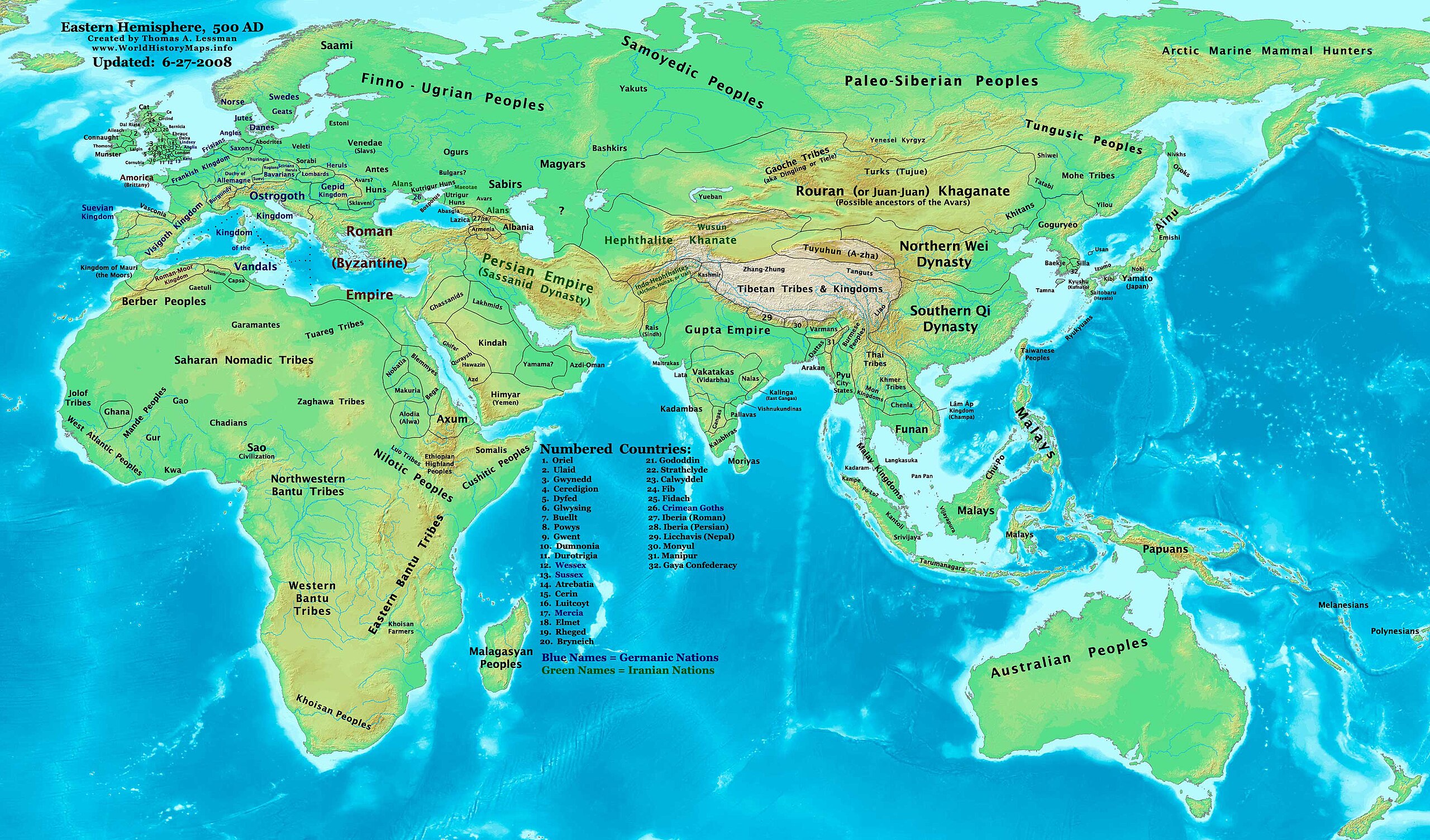
The 6th century CE marked the end of Classical Antiquity and the beginning of the Middle Ages in the West. It was dominated by the peak of the Byzantine Empire under Justinian I, the height of the Sassanid Empire, and the outbreak of the devastating Plague of Justinian.
-
Major Events
- Reign of Justinian I (527–565 CE) and the attempt to reconquer the Western Roman Empire.
- Nika Riots in Constantinople (532 CE).
- Plague of Justinian begins (541–542 CE), the first recorded bubonic plague pandemic.
- Sui Dynasty reunifies China (589 CE).
-
Major Empires
- Byzantine Empire (Eastern Roman Empire)
- Sassanid Empire (Persia)
- Frankish Kingdoms (Western Europe)
- Gupta Empire (India, declined mid-century)
-
Major Conflicts
- Vandalic War (533–534 CE) and reconquest of North Africa by Byzantines.
- Gothic War (535–554 CE) in Italy between Byzantines and Ostrogoths.
- Byzantine-Sassanid Wars (e.g., Lazic War).
-
Population Trends
- Significant decline in population across the Mediterranean due to the Plague of Justinian.
- Continued migrations of Germanic and Slavic tribes in Europe.
-
Key Leaders
- Justinian I (Byzantine Emperor)
- Empress Theodora (Byzantine Empress)
- Khosrau I (Sassanid Shah)
- Clovis I (King of the Franks, early century)
-
Key Intellectuals
- Procopius (Byzantine historian)
- Boethius (Roman philosopher, executed c. 525 CE)
- St. Benedict of Nursia (Founder of Western Monasticism)
-
Major Religions
- Christianity (Consolidation of the Church and monasticism; growth in Nubia, Frankish kingdoms)
- Zoroastrianism (State religion of the Sassanid Empire)
- Buddhism (Introduced to Japan from Baekje in 552 CE)
-
Key Developments
- Codex Justinianus (Codification of Roman Law) completed (c. 529-534 CE).
- Hagia Sophia completed in Constantinople (537 CE).
- Anno Domini (AD) system invented by Dionysius Exiguus (c. 525 CE).