13th Century CE
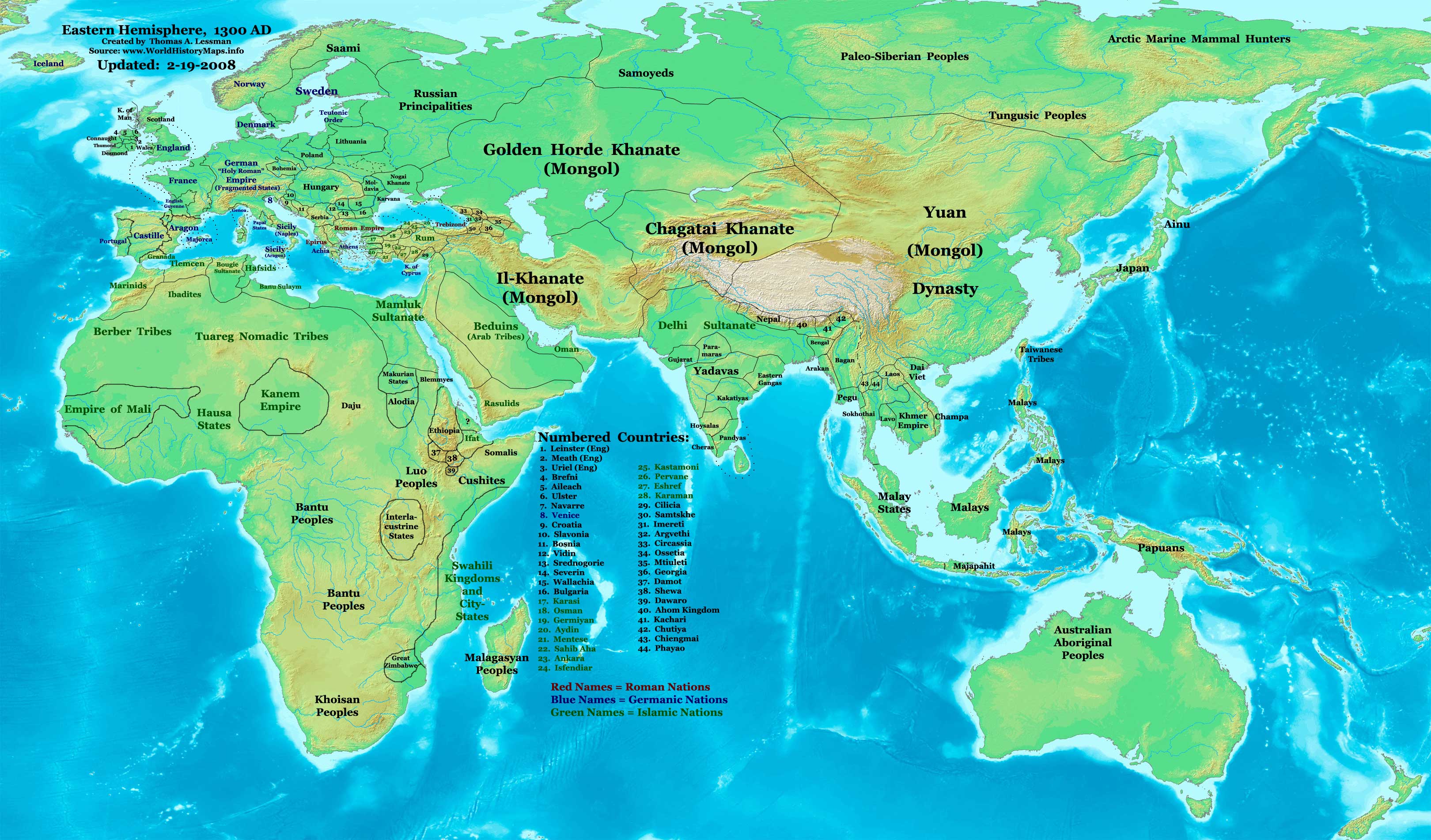
The 13th century was defined by the massive expansion of the Mongol Empire across Asia and Eastern Europe. In the West, it was a high point for scholastic philosophy and the construction of immense Gothic cathedrals.
- Major Events
- Genghis Khan unifies the Mongol tribes (1206 CE) and begins large-scale conquests.
- Sack of Constantinople by the Fourth Crusade (1204 CE).
- Signing of the Magna Carta in England (1215 CE), limiting the King's power.
- The Mongols defeat the Abbasid Caliphate and sack Baghdad (1258 CE).
- Major Empires
- Mongol Empire (Largest contiguous land empire in history)
- Mamluk Sultanate (Egypt, successfully repelled the Mongols)
- Holy Roman Empire
- Southern Song Dynasty (China, conquered by Mongols)
- Major Conflicts
- Mongol Conquests of Eurasia (throughout the century)
- Battle of Ain Jalut (1260 CE): Mamluks defeat the Mongols.
- Reconquista in Iberia (major advances against the Moors).
- Population Trends
- Massive population loss in areas conquered by the Mongols (Central Asia, Persia, Eastern Europe).
- Peak population and agricultural output during the High Middle Ages in Western Europe.
- Key Leaders
- Genghis Khan (Founder of the Mongol Empire)
- Kublai Khan (Grandson of Genghis, founded the Yuan Dynasty in China)
- Louis IX (St. Louis, King of France)
- Key Intellectuals
- Thomas Aquinas (Dominican friar, integrated Aristotle with Christian theology)
- Roger Bacon (English philosopher and scientist)
- Jalal ad-Din Muhammad Rumi (Persian poet and theologian)
- Major Religions
- Christianity (Peak power of the Papacy; rise of mendicant orders like Franciscans and Dominicans).
- Islam (Devastated by the Mongols but thrives under the Mamluks).
- Buddhism (Continues under the Yuan Dynasty in China).
- Key Developments
- The founding of the Yuan Dynasty in China by Kublai Khan.
- Marco Polo's journey to the East (late century).
- The widespread use of spectacles (eyeglasses) in Italy.