12th Century CE
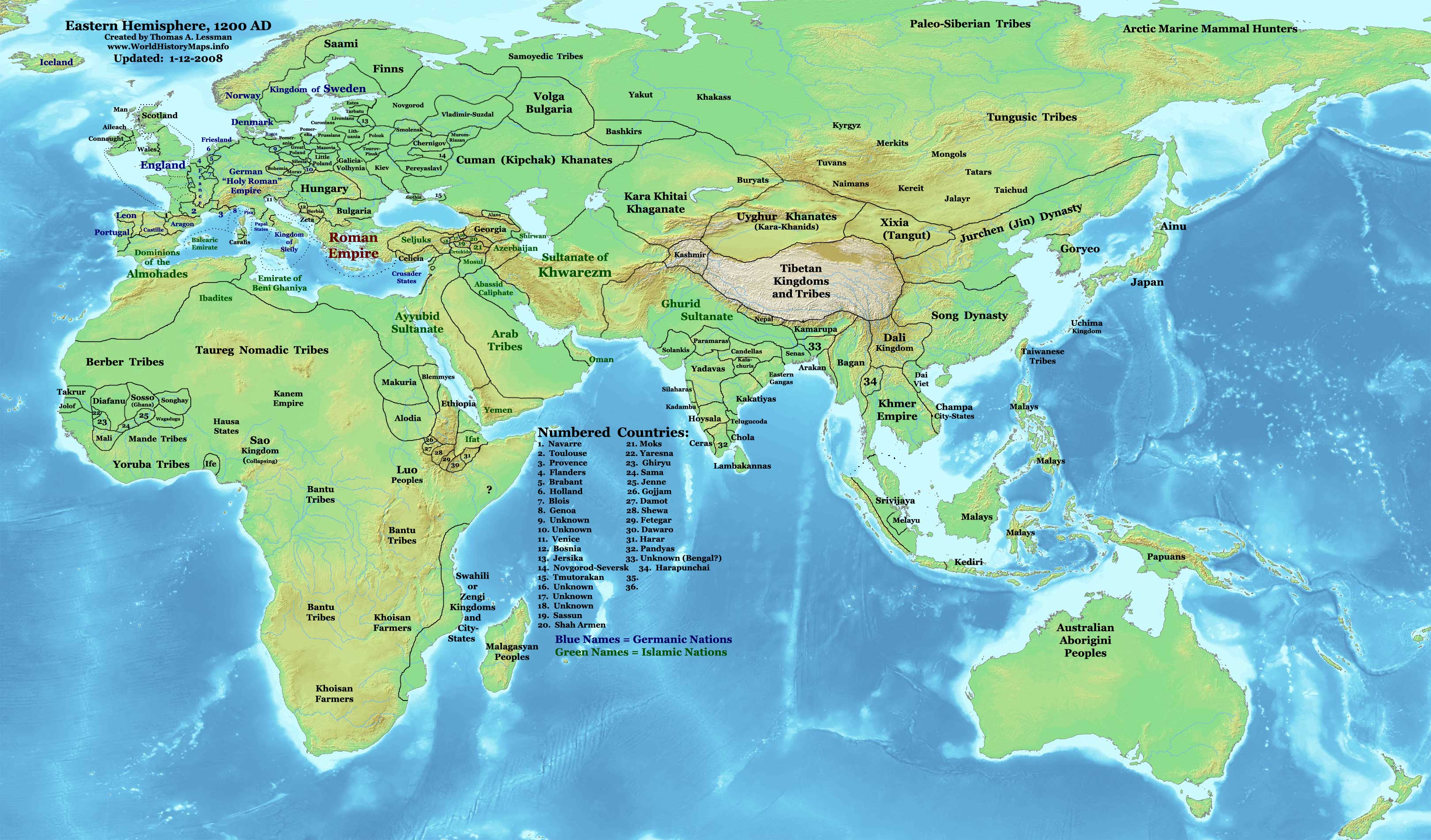
The 12th century saw a cultural and intellectual revival across Europe (the 12th-Century Renaissance), marked by the rise of universities, the construction of the first great Gothic cathedrals, and continued religious conflict in the Middle East.
- Major Events
- Founding of major European universities (e.g., University of Paris, University of Oxford).
- The Second and Third Crusades (1147–1192 CE).
- Saladin captures Jerusalem from the Crusaders (1187 CE).
- The High Classical period of the Song Dynasty's technological and economic power.
- Major Empires
- Holy Roman Empire (Under the Hohenstaufen Dynasty)
- Ayyubid Sultanate (Founded by Saladin)
- Byzantine Empire (Height of the Komnenian Restoration)
- Song Dynasty (China)
- Major Conflicts
- Third Crusade (1189–1192 CE)
- Battle of Hattin (1187 CE)
- The Angevin Empire (conflict between England and France)
- Population Trends
- Continued rapid population growth and agricultural expansion across Europe.
- Major growth of cities and towns supporting trade and new university centers.
- Key Leaders
- Saladin (Founder of the Ayyubid Dynasty, recaptured Jerusalem)
- Richard I (Richard the Lionheart, King of England)
- Frederick I Barbarossa (Holy Roman Emperor)
- Key Intellectuals
- Maimonides (Jewish philosopher and physician)
- Averroes (Islamic philosopher and polymath)
- Hildegard of Bingen (German polymath, mystic, and composer)
- Major Religions
- Christianity (Expansion of monastic orders; rise of Scholasticism).
- Islam (Consolidation under the Ayyubid Dynasty).
- Buddhism (Zen Buddhism begins to spread in Japan).
- Key Developments
- Rise of Gothic architecture (begins with the Basilica of St Denis).
- Systematic application of water and wind power for industry in Europe.
- The earliest recorded uses of banknotes (paper money) in the Song Dynasty.