10th Century CE
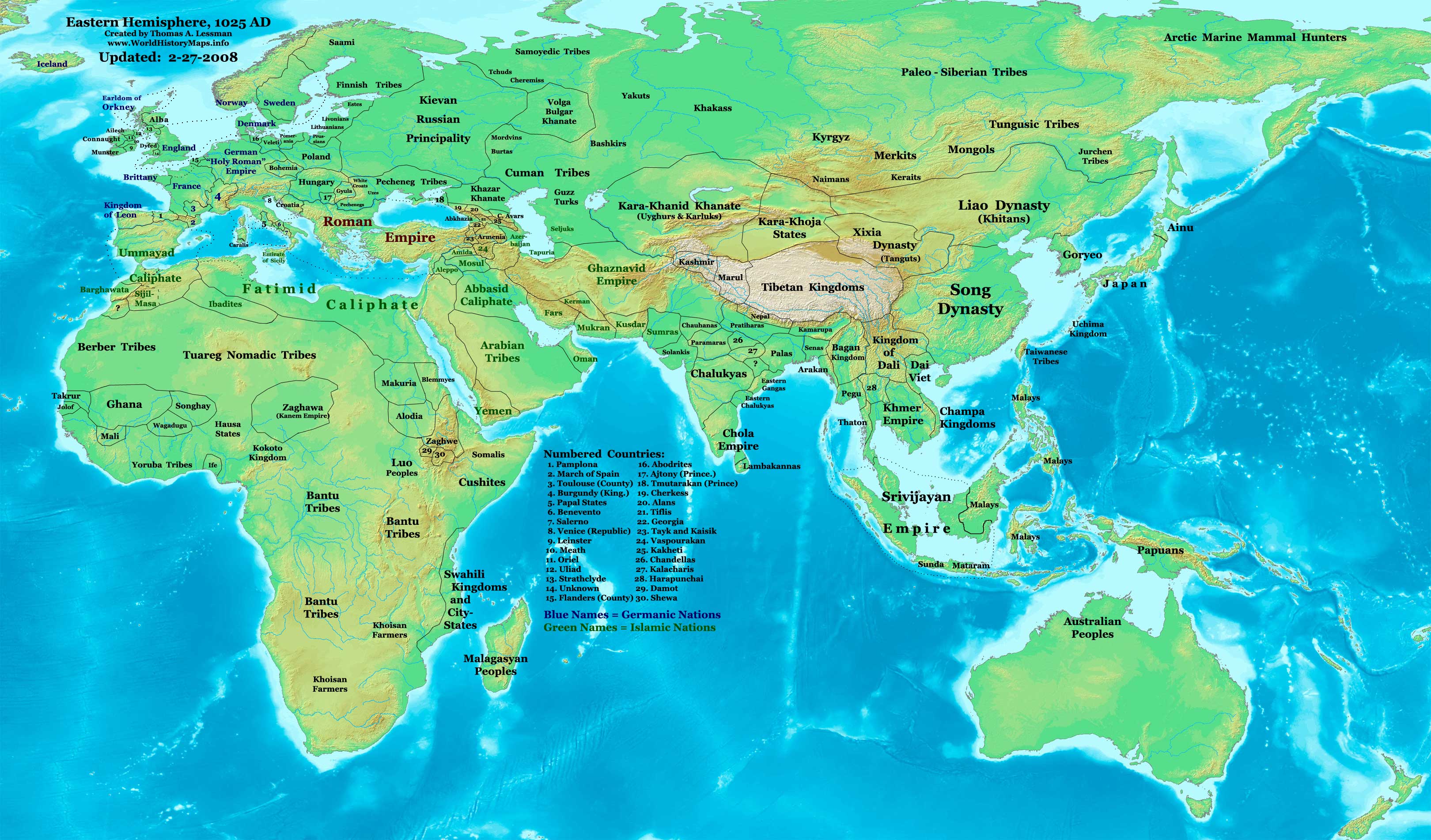
The 10th century CE is often seen as a period of consolidation following the chaos of the Viking and Magyar raids, marked by the rise of feudal states in Europe, a cultural revival in the Byzantine Empire, and the political reunification of China.
- Major Events
- Otto I crowned Holy Roman Emperor (962 CE), establishing the Ottonian Dynasty and the Holy Roman Empire.
- Founding of the Song Dynasty in China (960 CE), unifying most of China after the Five Dynasties and Ten Kingdoms period.
- Conversion of Kievan Rus' to Orthodox Christianity (late 10th century).
- The height of the Macedonian Renaissance in the Byzantine Empire.
- Major Empires
- Holy Roman Empire (Central Europe)
- Song Dynasty (China)
- Byzantine Empire (East)
- Fatimids (North Africa/Egypt) and Umayyads (Al-Andalus/Spain)
- Major Conflicts
- Battle of Lechfeld (955 CE): Otto I defeats the Magyars, ending their raids into Western Europe.
- Byzantine-Bulgarian Wars continue, with Byzantium gaining the upper hand.
- Consolidation wars leading to the foundation of the Song Dynasty.
- Population Trends
- Population growth begins in Western Europe as raids subside and feudal systems provide stability.
- Massive urbanization and population density in Song China.
- Key Leaders
- Otto I (Holy Roman Emperor)
- Basil II (Byzantine Emperor, beginning his long reign)
- Taizu of Song (Founder of the Song Dynasty)
- Key Intellectuals
- Gerbert of Aurillac (later Pope Sylvester II, introduced Arabic numerals to Europe)
- Firdausi (Persian poet, began writing the Shahnameh)
- Constantine VII Porphyrogenitus (Byzantine Emperor and scholar)
- Major Religions
- Christianity (Major spread to Scandinavian, Slavic, and Hungarian peoples).
- Islam (Splits with three rival caliphates: Abbasid, Fatimid, Umayyad).
- Buddhism and Neo-Confucianism (Flourish under the Song Dynasty).
- Key Developments
- Establishment of the first permanent universities (e.g., Al-Azhar in Cairo, 970 CE).
- Significant advancements in printing and gunpowder technology in Song China.
- Beginnings of the high medieval economic and cultural revival in Europe.